
Introduction
India is rapidly becoming one of the world’s largest digital economies. Today, millions of people use online banking, UPI payments, social media, cloud applications, e-commerce platforms, and digital government services daily. While this digital revolution has made life easier, it has also increased cyber threats significantly.
Cybercriminals continuously exploit technology to commit crimes such as phishing attacks, banking fraud, identity theft, ransomware attacks, social media hacking, online scams, cyberstalking, and data breaches.
To protect citizens and organizations from these threats, India has established various cyber laws and legal frameworks. These laws define what constitutes a cybercrime, prescribe punishments for offenders, and provide mechanisms for reporting and investigating cyber incidents.
Whether you are a student, working professional, business owner, parent, or cybersecurity enthusiast, understanding cyber laws is essential for protecting yourself and staying legally compliant in today’s digital world.
In this detailed guide, we will explore:
- What cyber laws are
- Why cyber laws are important
- Information Technology Act, 2000
- Common cyber crimes and punishments
- Digital rights and responsibilities
- Cybercrime reporting process
- Cyber fraud helpline numbers
- Cybersecurity compliance for businesses
- Best practices for individuals and organizations


What Are Cyber Laws?
Cyber laws are legal regulations that govern activities involving computers, networks, digital devices, electronic communications, and the internet.
These laws are designed to:
- Protect users from cybercrime
- Regulate online transactions
- Protect personal data
- Recognize digital signatures
- Prevent misuse of technology
- Promote secure electronic commerce
- Ensure accountability in cyberspace
Simply put, cyber laws are the digital equivalent of traditional laws that govern physical-world activities.
Why Are Cyber Laws Important?
Imagine a world where hackers could steal money, steal identities, leak personal photos, or attack organizations without facing any legal consequences.
Cyber laws help prevent such situations by:
1. Protecting Personal Information
People share sensitive information online every day:
- Aadhaar details
- PAN information
- Bank account information
- Medical records
- Personal photographs
- Mobile numbers
Cyber laws help safeguard this information.
2. Preventing Financial Fraud
India records thousands of cyber fraud complaints every day involving:
- UPI fraud
- Fake loan apps
- Credit card fraud
- Investment scams
- OTP scams
Cyber laws help authorities investigate and punish offenders.
3. Supporting E-Commerce
Online shopping platforms depend on cyber laws to establish trust between buyers and sellers.
Without legal protection, e-commerce growth would be severely affected.
4. Protecting Businesses
Organizations handle large volumes of customer and employee data.
Cyber laws ensure businesses maintain adequate security measures to protect this information.
5. Protecting National Security
Critical infrastructure such as:
- Power grids
- Airports
- Railways
- Government systems
- Defense networks
can be targeted by cyberattacks.
Cyber laws provide mechanisms for protecting these systems.
Evolution of Cyber Laws in India
Before the internet era, traditional laws were sufficient to deal with most crimes.
However, the rise of digital technologies introduced new forms of crime that existing laws could not adequately address.
To tackle these challenges, India enacted the Information Technology Act, 2000.
This became the country’s first dedicated cyber law legislation.
The Act was amended in 2008 to strengthen cybercrime provisions and improve cybersecurity regulations.
Today, the IT Act remains the backbone of India’s cyber legal framework.
Information Technology Act, 2000 (IT Act)
The Information Technology Act, 2000 was enacted to provide legal recognition to electronic records and digital transactions.
The Act came into force on 17 October 2000.
It is India’s primary legislation governing cyber activities.

Objectives of the IT Act
The IT Act aims to:
- Recognize electronic records
- Recognize digital signatures
- Facilitate e-governance
- Enable electronic commerce
- Prevent cybercrime
- Establish cyber tribunals
- Promote secure digital transactions
Important Sections of the IT Act
Section 43
Deals with unauthorized access to computer systems.
Includes:
- Downloading data without permission
- Introducing viruses
- Damaging computer systems
- Disrupting services
Victims may receive compensation.
Section 66 – Computer Related Offences
If a person dishonestly accesses a computer system without authorization, it becomes a criminal offense.
Examples:
- Hacking
- Data theft
- Unauthorized system access
Punishment:
- Up to 3 years imprisonment
- Fine up to ₹5 lakh
- Or both
Section 66C – Identity Theft
Using another person’s:
- Password
- Digital Signature
- Login Credentials
- Personal Information
Punishment:
- Up to 3 years imprisonment
- Fine up to ₹1 lakh
Section 66D – Cheating by Personation
Commonly used against:
- Online scammers
- Fake customer care fraudsters
- OTP fraud criminals
- Social media impersonators
Punishment:
- Up to 3 years imprisonment
- Fine up to ₹1 lakh
Section 66E – Violation of Privacy
Capturing or sharing private images without consent.
Punishment:
- Up to 3 years imprisonment
- Fine up to ₹2 lakh
Section 67
Publishing obscene content electronically.
Punishment:
- Up to 3 years imprisonment
- Fine up to ₹5 lakh
Section 67B
Publishing or transmitting child sexual abuse material.
This is considered a serious cyber offense.
Punishment:
- Imprisonment
- Heavy financial penalties
Section 72
Breach of confidentiality and privacy.
Applies when someone illegally discloses confidential information obtained through authorized access.
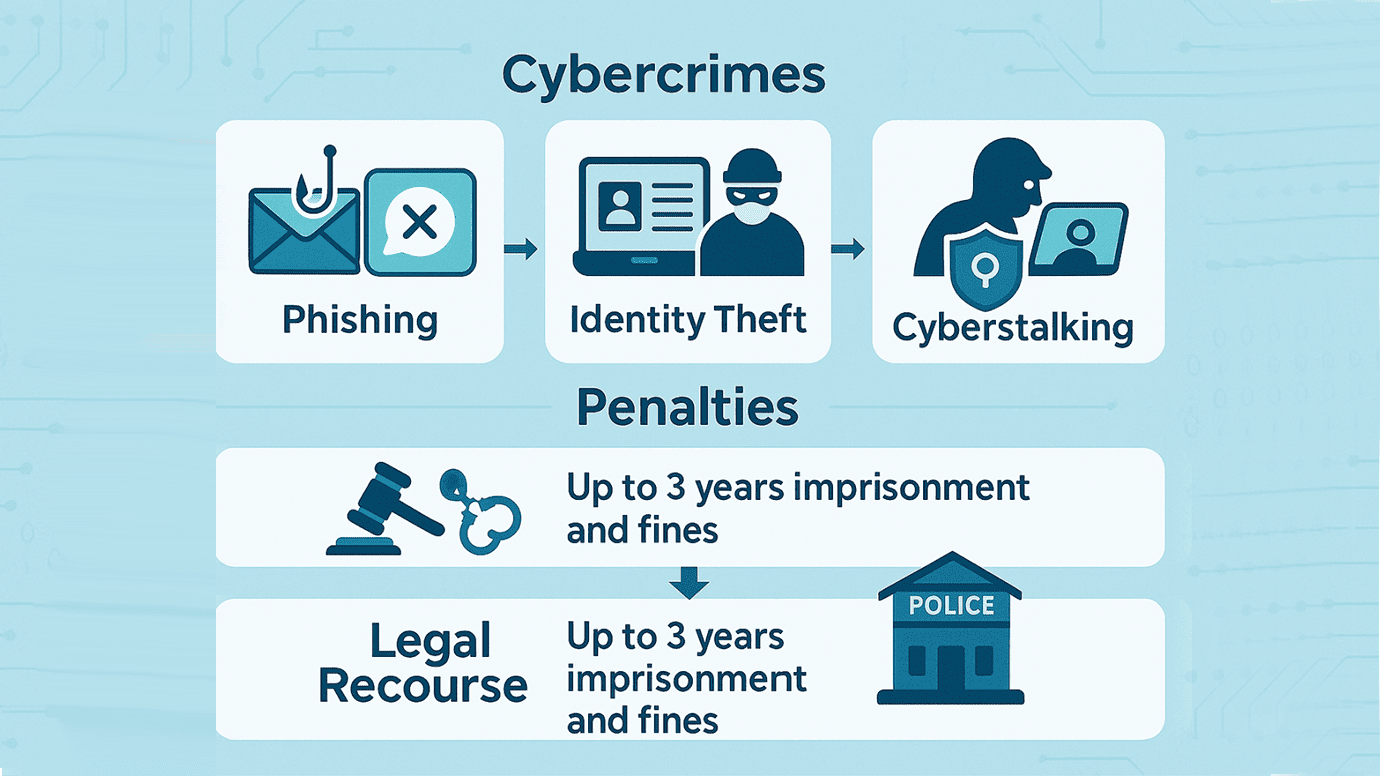
Common Cyber Crimes in India
Phishing Attacks
Attackers create fake:
- Banking websites
- Government portals
- Login pages
to steal credentials.
UPI Fraud
Fraudsters trick victims into:
- Sharing OTPs
- Approving payment requests
- Installing malicious apps
SIM Swap Fraud
Attackers obtain duplicate SIM cards and gain access to:
- Banking accounts
- Social media accounts
- Email accounts
Social Media Hacking
Cybercriminals compromise:
- Instagram accounts
- Facebook accounts
- WhatsApp accounts
- LinkedIn profiles
Ransomware
Attackers encrypt data and demand payment for recovery.
Victims often include:
- Businesses
- Hospitals
- Schools
- Government agencies
Identity Theft
Criminals misuse:
- Aadhaar
- PAN
- Banking information
- Personal documents
for financial fraud.
Digital Arrest Scams: A Growing Threat
One of the fastest-growing cyber scams in India is the Digital Arrest Scam.
In these scams, fraudsters impersonate:
- Police officers
- CBI officials
- Income Tax officers
- RBI representatives
Victims receive calls claiming they are involved in criminal investigations.
The fraudsters then pressure victims to transfer money for “verification” or “security checks.”
Remember:
No government agency conducts investigations through video calls demanding money.
If anyone claims you are under “digital arrest,” it is almost certainly a scam.
How to Report Cyber Crime in India

Many victims lose money because they delay reporting incidents.
The faster you report, the higher the chance of recovering funds.
Step 1: Call 1930 Immediately
If you become a victim of:
- UPI fraud
- Credit card fraud
- Banking fraud
- Investment scam
Immediately call:
Cyber Crime Helpline: 1930
This is India’s official cyber fraud reporting helpline.
The sooner the complaint is registered, the greater the chance that the transaction can be frozen.
Step 2: Report Online
You can file a complaint through the National Cyber Crime Reporting Portal.
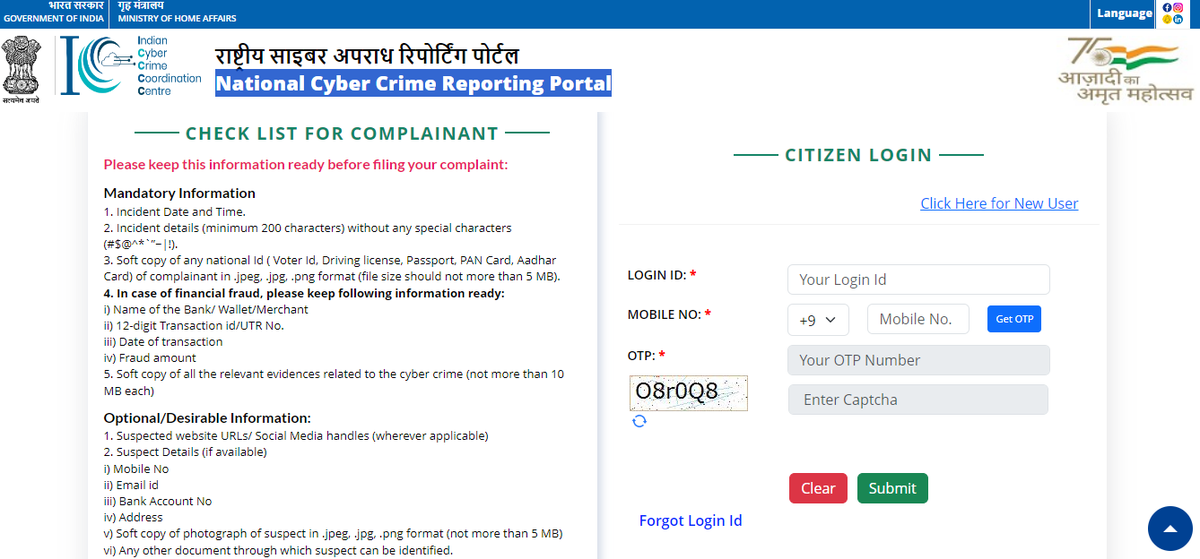
Report:
- Financial fraud
- Social media crimes
- Cyber bullying
- Identity theft
- Online harassment
- Hacking incidents
Keep ready:
- Transaction details
- Screenshots
- Mobile numbers
- Email addresses
- Fraudulent links
- Bank account information
Step 3: Visit Local Cyber Police Station
For serious incidents:
- Data breaches
- Extortion
- Cyber stalking
- Ransomware attacks
visit your nearest cyber police station.
Carry:
- Screenshots
- Logs
- Emails
- Bank statements
- Transaction records
What Evidence Should You Preserve?
Never delete evidence.
Preserve:
- Screenshots
- Chat messages
- Transaction receipts
- Fraudulent emails
- Mobile numbers
- Website URLs
- Audio recordings
This evidence helps investigators trace attackers.
Cyber Security Compliance for Businesses
Modern organizations must combine legal compliance with cybersecurity.
Important security controls include:
Security Awareness Training
Employees remain the biggest target for attackers.
Regular training reduces human errors.
Vulnerability Assessment and Penetration Testing (VAPT)
Helps identify vulnerabilities before attackers exploit them.
Security Audits
Regular audits ensure compliance and improve cybersecurity posture.
Data Protection Policies
Organizations should establish:
- Access controls
- Encryption standards
- Password policies
- Backup strategies
Incident Response Plan
Every organization should have a documented plan for responding to cyber incidents.
Rights and Responsibilities of Internet Users
As digital citizens, we enjoy several rights:
Rights
- Right to privacy
- Right to secure transactions
- Right to legal protection
- Right to report cybercrime
Responsibilities
- Protect passwords
- Avoid illegal activities
- Respect intellectual property
- Verify online information
- Follow cybersecurity best practices
Cyber Safety Tips for Individuals
- Enable Multi-Factor Authentication (MFA)
- Never share OTPs
- Use strong passwords
- Update software regularly
- Avoid suspicious links
- Verify customer care numbers
- Use licensed software
- Review bank transactions frequently
- Secure social media accounts
- Report fraud immediately
Future of Cyber Laws in India
As technologies like Artificial Intelligence, Cloud Computing, Blockchain, IoT, and Quantum Computing continue to evolve, cyber laws will become even more important.
Future regulations are expected to focus on:
- Data protection
- AI governance
- Digital privacy
- Critical infrastructure security
- Cross-border data transfers
- Cyber resilience frameworks
Organizations that invest in cybersecurity today will be better prepared for tomorrow’s legal and technological challenges.
Conclusion
Cybercrime is no longer a problem limited to large corporations or government agencies. Every individual using a smartphone, computer, social media account, or online banking service is a potential target.
India’s cyber laws, particularly the Information Technology Act, 2000, provide a legal framework for protecting citizens, businesses, and government systems from digital threats. However, laws alone cannot ensure safety. Cyber awareness, responsible online behavior, and proactive cybersecurity measures are equally important.
If you become a victim of cyber fraud, remember to report the incident immediately through the Cyber Crime Helpline (1930) and the National Cyber Crime Reporting Portal. Quick reporting can significantly improve the chances of preventing financial loss and helping law enforcement take action against cybercriminals.
At TriosCyber, we are committed to promoting cybersecurity awareness, cyber law education, security audits, VAPT services, and cybersecurity training programs to help individuals and organizations build a safer digital future.
Stay Alert. Stay Aware. Stay Secure.